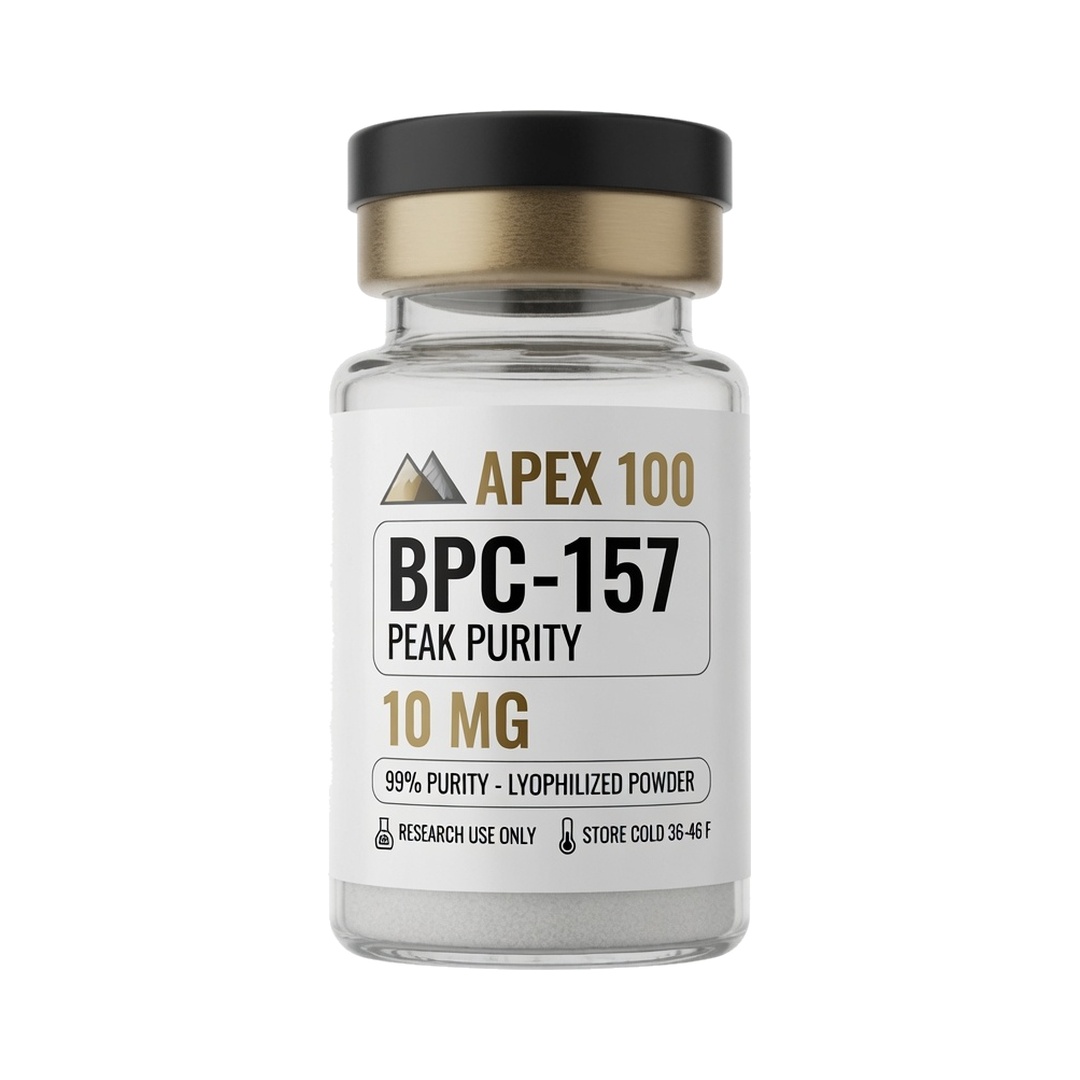
BPC-157
A pentadecapeptide derived from a gastric protein — the most-studied tissue-repair research peptide.
Get the full guide →Overview
BPC-157 is a stable synthetic pentadecapeptide corresponding to a partial sequence of a body-protection compound identified in gastric juice. It is one of the most widely investigated peptides in regenerative and cytoprotection research.
Mechanism & receptor biology
Preclinical literature explores its interaction with angiogenic and growth-factor pathways, including effects on VEGFR2 signaling and nitric-oxide systems, in models of tissue integrity. Its notable stability in aqueous and acidic conditions makes it a practical laboratory research tool.
Research context
Animal-model studies examine roles in vascular, connective-tissue and gastrointestinal research contexts. It is handled strictly as a reference research material.
Reference specifications
| Sequence | Gly-Glu-Pro-Pro-Pro-Gly-Lys-Pro-Ala-Asp-Asp-Ala-Gly-Leu-Val |
|---|---|
| Molecular formula | C₆₂H₉₈N₁₆O₂₂ |
| Molecular weight | 1419.54 g/mol |
| CAS number | 137525-51-0 |
BPC-157 is offered strictly for laboratory and research use only. It is not a drug, supplement, or article of food, and is not intended to diagnose, treat, cure, or prevent any disease, nor for human or animal consumption. The information above is an educational summary of published receptor biology and does not constitute medical advice.
Related compounds in Healing & Tissue Repair
Get the full Peptide Research Guide
The complete reference — all 20 compound profiles, five research classes, receptor biology and laboratory-grade standards — plus a free reconstitution calculator, delivered as a PDF.
Get the free guide →