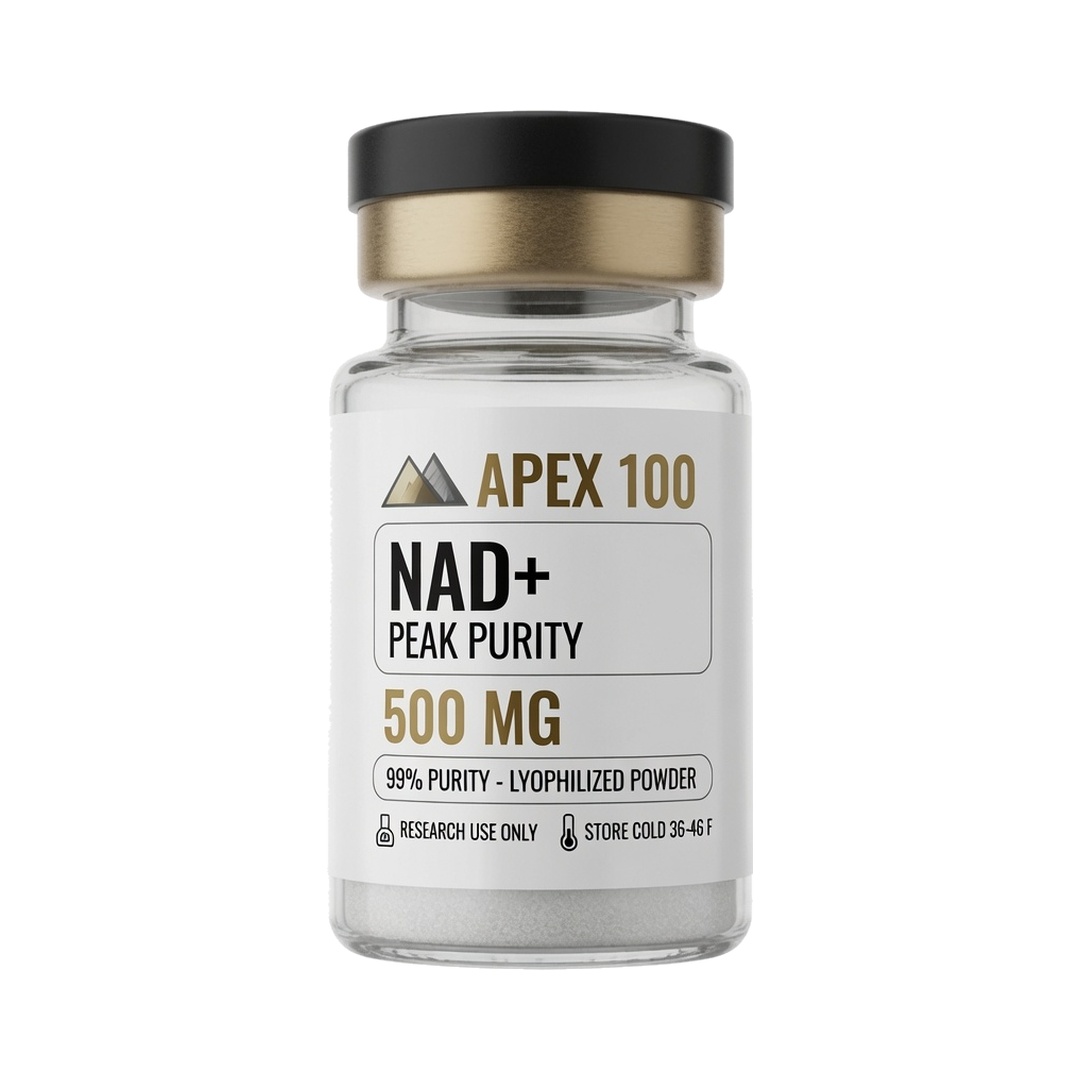
NAD+
The central redox coenzyme underpinning modern cellular-energy and longevity research.
Get the full guide →Overview
NAD+ is not a peptide but a coenzyme — nicotinamide adenine dinucleotide — present in every living cell. It is included here as a core research material in cellular-energy and aging science.
Mechanism & receptor biology
It functions as an electron carrier in redox reactions and as a required substrate for sirtuins and PARP enzymes. Research explores how cellular NAD+ availability influences these signaling and DNA-repair pathways in model systems.
Research context
Used broadly in bioenergetics, sirtuin-biology and cellular-aging research as a fundamental reference cofactor.
Reference specifications
| Sequence | Dinucleotide coenzyme (not a peptide) |
|---|---|
| Molecular formula | C₂₁H₂₇N₇O₁₄P₂ |
| Molecular weight | 663.43 g/mol |
| CAS number | 53-84-9 |
NAD+ is offered strictly for laboratory and research use only. It is not a drug, supplement, or article of food, and is not intended to diagnose, treat, cure, or prevent any disease, nor for human or animal consumption. The information above is an educational summary of published receptor biology and does not constitute medical advice.
Related compounds in Longevity & Mitochondrial
Get the full Peptide Research Guide
The complete reference — all 20 compound profiles, five research classes, receptor biology and laboratory-grade standards — plus a free reconstitution calculator, delivered as a PDF.
Get the free guide →